Organoid-on-a-Chip Department
Through the directed differentiation of human-induced pluripotent stem cells or the three-dimensional culture of primary tissues, it is possible to simulate human organs that have stable genetic characteristics and can be cultured in vitro for a long time. Organoids exhibit cellular composition, structural composition, and physiological functions that closely resemble those of their corresponding organs, and can be used to simulate the responses of real organs to drugs, complete the process of pharmacological or toxicological evaluation, and replace some animal models. Various organoid models derived from human-induced pluripotent stem cells, such as islets, liver, brain organoids, and other patient-derived tumor organoids, such as gastric cancer organoids and colon cancer organoids, have been successfully established.
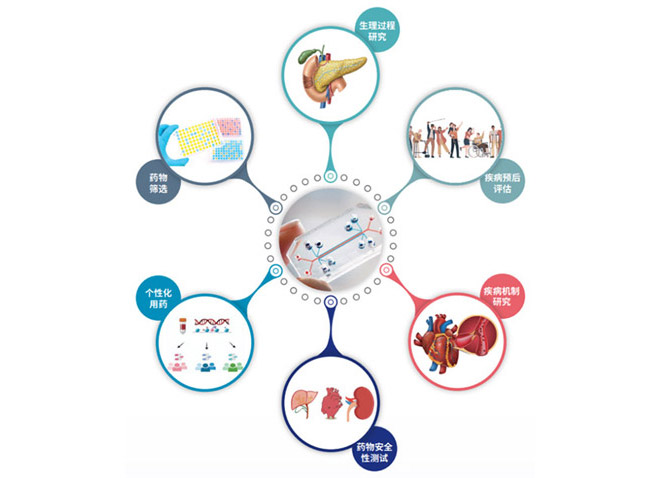
The organ-on-a-chip, with microfluidic chips as the core, has multiple cell culture compartments that simulate the human tissue and organ environment. It is used to simulate the complex factors within the tissue and organ microenvironment, including various living cells, functional tissue interfaces, biofluids, and mechanical force stimulation, reflecting the main structural and functional characteristics of human tissues and organs. Liver-on-a-chip, small intestine-on-a-chip, branching blood vessel-on-a-chip, and chips for tumor-immune environment interaction studies, etc. have been developed. In the future, they can be widely used in the study of physiological processes and disease pathogenesis, as well as in drug screening, personalized medicine, drug safety testing, and can also help to realize the prognostic evaluation of diseases.
Organ-on-a-Chip - Constructing the Next-Generation Animal Alternative Platform