
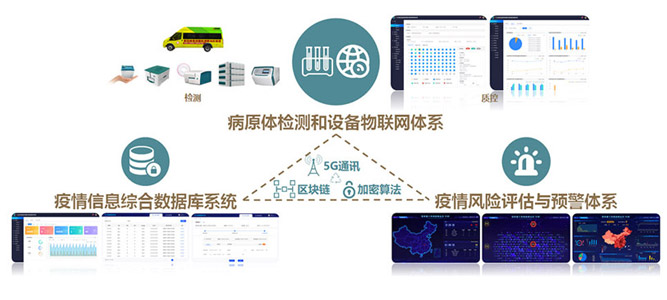
To respond to possible major outbreaks of emerging or re-emerging infectious diseases in the future, the country should establish a nationwide automatic epidemic monitoring and reporting system covering all provinces (autonomous regions, municipalities directly under the central government), Xinjiang Production and Construction Corps, as well as cities and counties. This system integrates novel pathogen detection technology with big data and AI technology to achieve networked, real-time, automated epidemic monitoring and early warning. The research institute has developed a Smart Monitoring Skynet System for Major Epidemics, which ensures "two firsts": first-hand data networking and first-time reporting. This allows decision-makers to keep abreast of the epidemic's development until its conclusion, forming a smart epidemic monitoring "Skynet" without any dead ends. In this way, when faced with the occurrence of an epidemic, or even the advent of biological warfare, the country can calmly and promptly take preventive measures to minimize the losses caused by the epidemic or war to people's lives, safety, and the national economy. The Skynet system consists of three core systems: a major epidemic pathogen detection equipment IoT system, a major epidemic pathogen detection system, and a major epidemic risk assessment and early warning system.
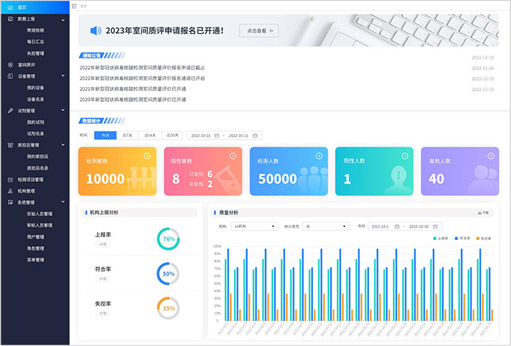
The goal of building an information platform for mutual recognition of clinical test results is to achieve automatic and real-time monitoring of indoor quality control and external quality assessment data for clinical testing institutions. This ensures the standardization of test results and provides support for the information platform of mutual recognition of clinical results. Specifically, the reporting and evaluation of indoor quality control and external quality assessment data include basic information maintenance, indoor quality control data reporting, indoor quality control data collection and information feedback, and monthly quality analysis reports for the laboratory. The dynamic management of automatic data collection and quality evaluation for indoor quality control and external quality assessment includes: a data transmission interface between clinical testing equipment and this system to achieve automatic data collection for indoor quality control; and dynamic management of laboratory quality evaluation based on automatically reported data.
Relying on the company's complete chronic disease prevention and control product system and comprehensive solutions, Bio-Technology conducted community health screening and management projects involving more than 180,000 people in Liangjiang New Area of Chongqing, Fuxin City, Liaoning Province, and Kunming City, Yunnan Province. In the communities under the jurisdiction of Liangjiang New Area of Chongqing, a two-year (2017-2018) diabetes screening and health management program has been completed for 100,000 permanent residents. On May 5, 2017, the public welfare project for diabetes prevention and control in the communities of Liangjiang New Area, Chongqing was successfully launched. Currently, the first and largest diabetes database of healthy people in China has been established, providing a demonstration and sample for chronic disease health management in China, valuable data and decision-making basis for improving the level of grass-roots health management of Chinese citizens, and also contributing to reducing the prevalence of diabetes among Chinese people.


Copyright © 2000-2023博奥生物集团有限公司 京ICP备14023013号-3
《互联网药品信息服务资格证书》: (京) - 非经营性-2016-0047 京公网安备11011402013114号